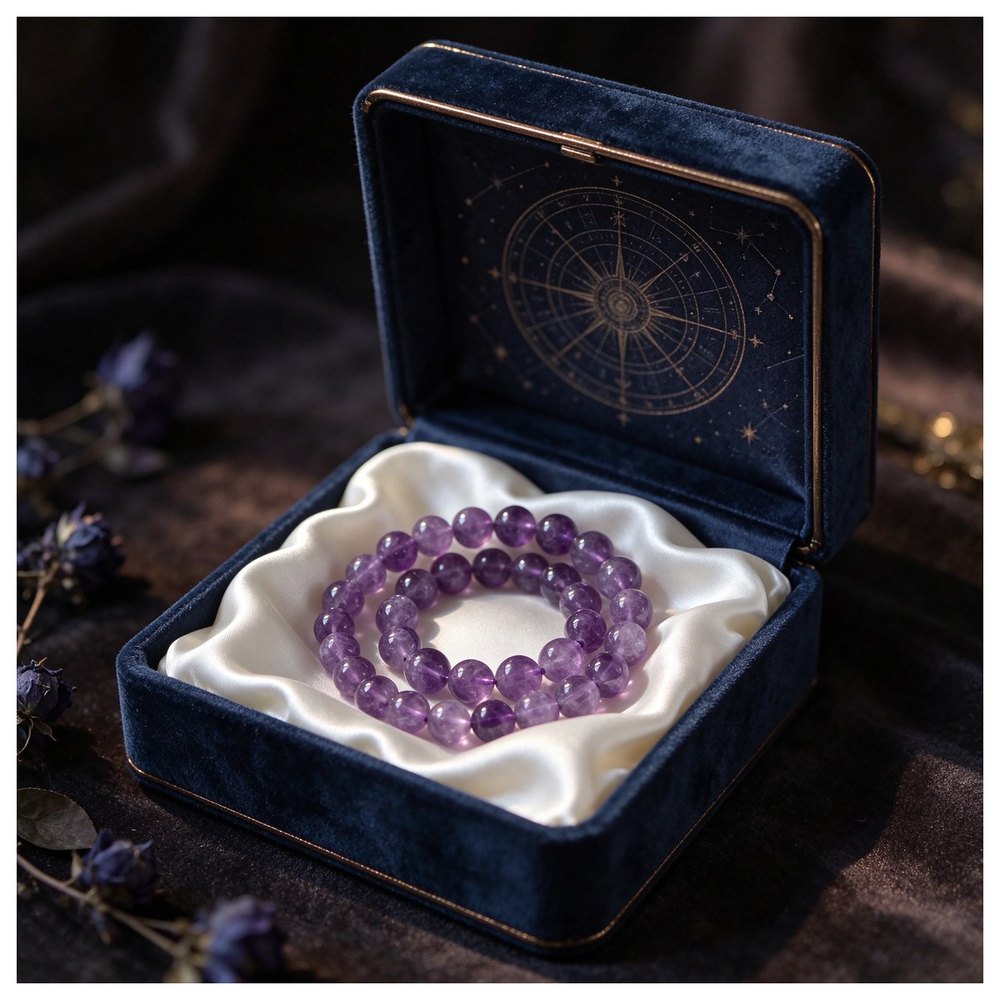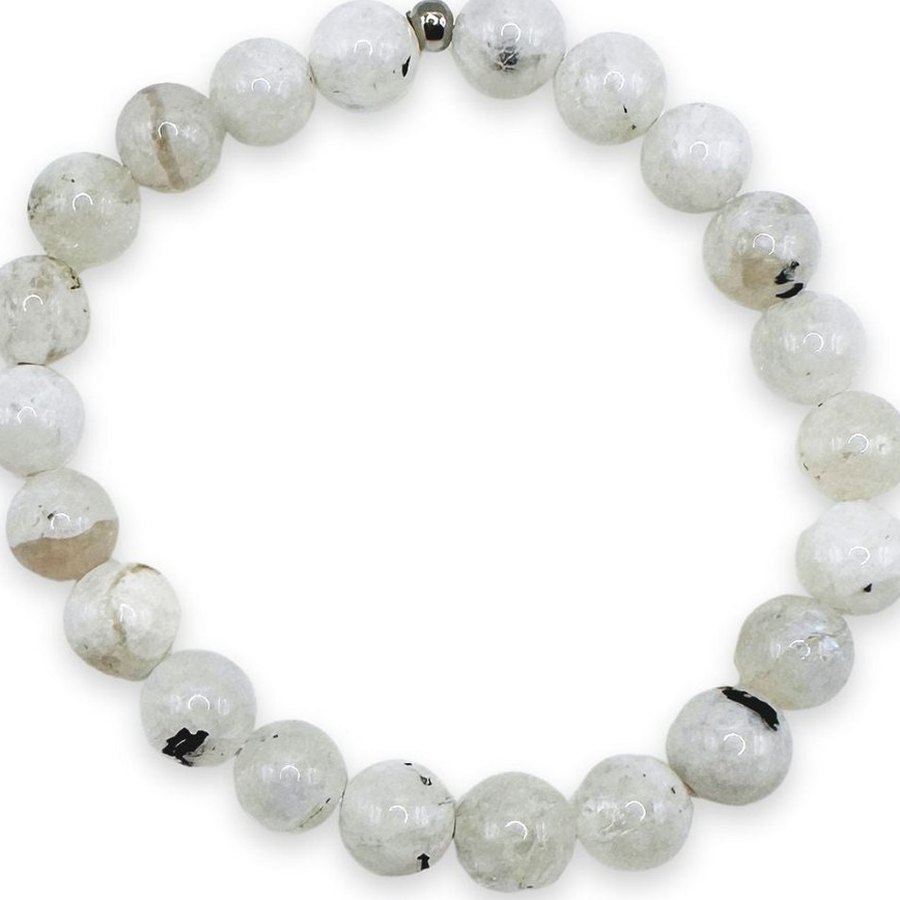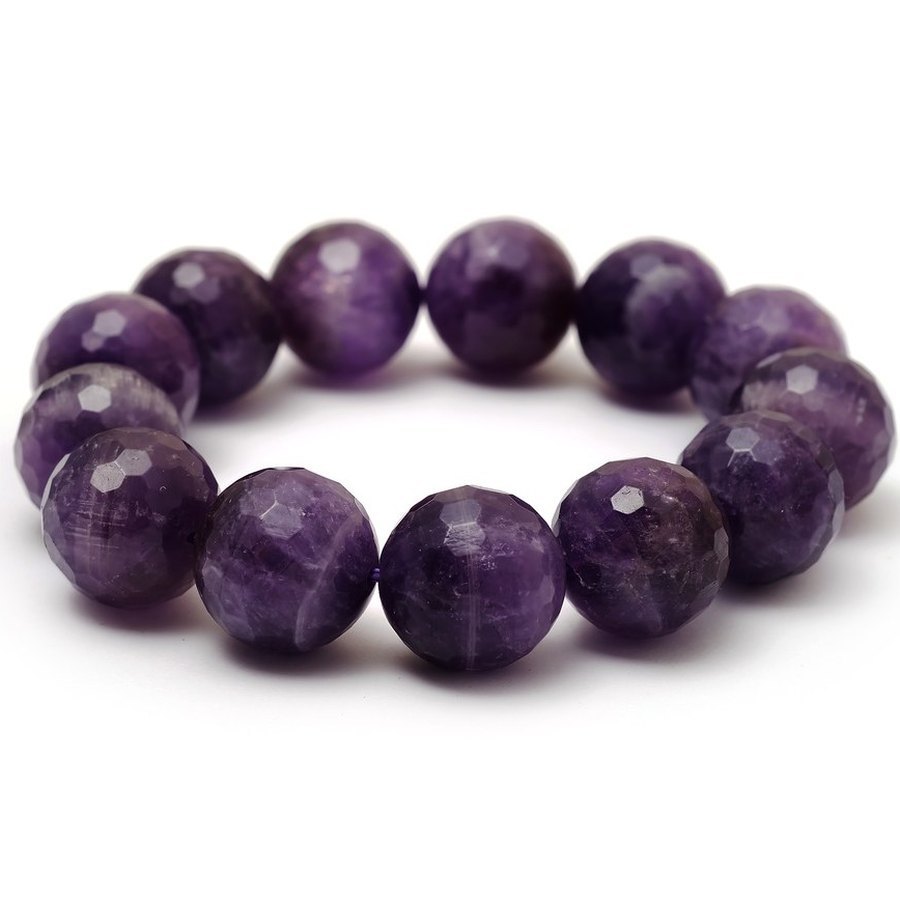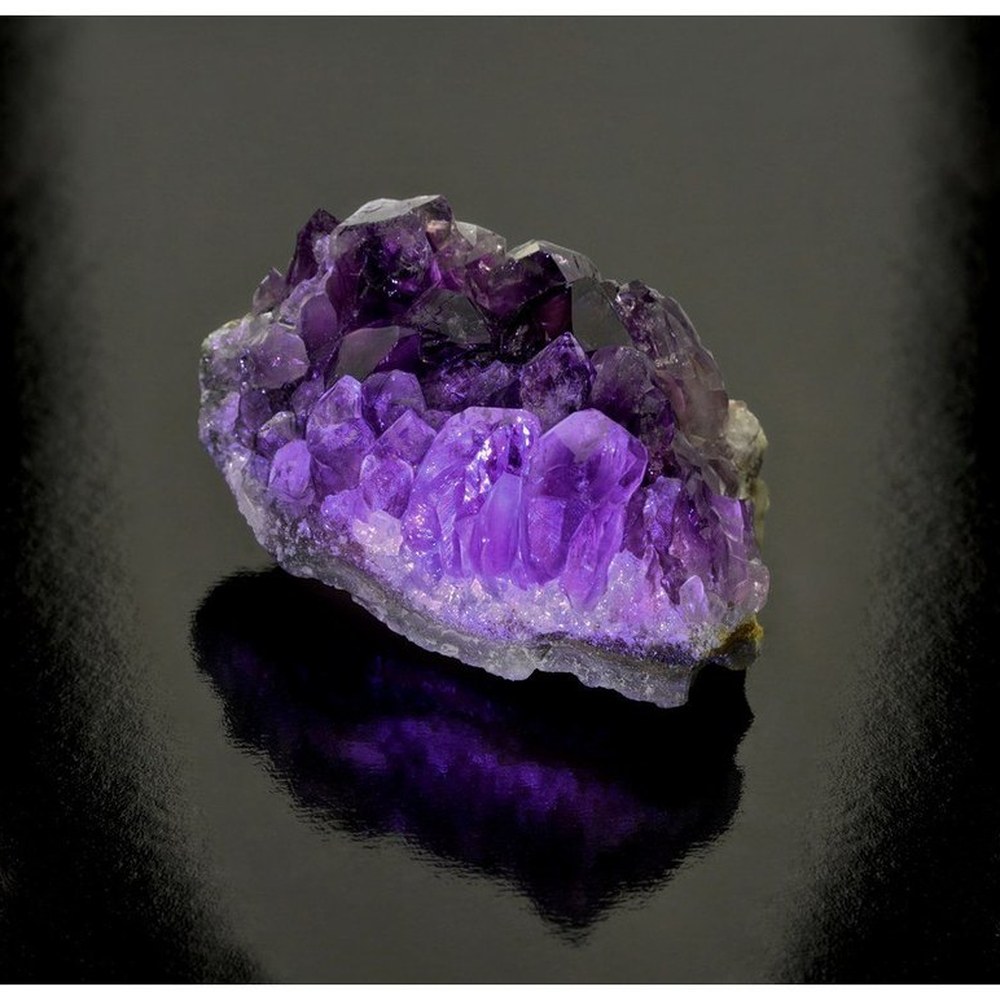
The crystal bracelet market has a vocabulary problem. “Natural”, “healing”, “genuine” and “AAA” are used interchangeably by sellers who mean different things, and the difference in price between a natural amethyst bracelet and a dyed quartz one can be tenfold. These are the checks we use when buying rough, in the order that catches the most fakes fastest.
1. Price is the first test
A natural 8 mm amethyst bracelet, well graded, at retail, sits in a fairly narrow band. If a listing undercuts that band by half and the photographs look unusually saturated, the material is almost certainly dyed quartz, glass or synthetic. There is no sourcing trick that makes good natural stone cheap; there is only stone that is not what it says.
2. Temperature and weight in the hand
Natural quartz feels cold against the wrist for the first minute and heavy for its size. Glass warms up almost immediately and feels light. Resin feels warm and plastic. This is not a laboratory test, but it is the fastest one you can do in a shop.
3. Look for bubbles, not just inclusions
Natural crystal contains inclusions: veils, needles, colour bands, small fractures. Glass contains bubbles — perfectly round, often in clusters, visible under a loupe or a phone macro lens. A single round bubble is decisive; natural stones do not have them.
4. Colour zoning
Real amethyst, rose quartz and citrine almost always show uneven colour: a darker core, a paler edge, a band that runs diagonally through a bead. Dyed quartz is suspiciously even, and the dye tends to concentrate in cracks rather than in the body of the stone. Turn the bracelet in daylight and look for variation between beads — if all twelve are identical, be careful.
5. Dye in the fractures
Dyed stone shows a darker line where a fracture meets the surface, as if the colour were drawn on with a pen. A natural fracture is white or reflective, not coloured. On dyed rose quartz and dyed lapis this is usually visible without magnification.
6. Surface texture and polish
Natural stone takes a polish that still reads as stone: a soft sheen with tiny irregularities, sometimes a faint orange-peel texture under a loupe. Glass and resin polish to a perfect, uniform mirror. If every bead reflects the window in exactly the same way, look again.
7. Ultraviolet light
A cheap UV torch is a useful tool. Some dyes fluoresce brightly — particularly on dyed howlite sold as turquoise. Natural stones may fluoresce too (some calcites and fluorites do), so UV is evidence, not a verdict: bright even fluorescence across a bracelet usually means dye or resin.
8. Disclosure and paperwork
The most reliable test is what the seller is willing to write down. Any legitimate supplier can tell you three things: the stone, the treatment (none, heat, stabilisation, dye), and where it was cut. If a listing says only “natural healing crystal” and nothing about treatment, assume the treatment exists until proven otherwise.
Treatments that are normal — and should still be disclosed
Heat treatment
Most citrine in the market is amethyst that has been heated to about 500°C, which shifts violet to amber. The treatment is stable, decades old, and does not make the stone fake. It does make it not-natural-colour, and the seller should say so. We label our heat-treated citrine cluster plainly.
Stabilisation
Much turquoise is stabilised with a clear resin because the raw stone is too chalky to polish. Stabilised turquoise is real turquoise; reconstituted turquoise, made from crushed stone and resin, is not. Both are common and both should be named.
Dyeing
Dyed quartz, dyed howlite and dyed agate are the most common fakes in the bracelet trade. Dye is not a treatment we accept in a piece sold as natural colour.
What we refuse
Glass, resin, dyed quartz, dyed howlite sold as turquoise, reconstituted turquoise, and any bracelet where the supplier cannot name the treatment. We also refuse "AAA" as a grade — it has no agreed definition and is used to imply quality that has not been checked.
Our authenticity page sets out how we grade and what we disclose. If you are comparing a piece elsewhere, the eight checks above will tell you most of what you need in under five minutes.