Amethyst is the most recognisable stone in the crystal market and the one most often graded badly — partly because the trade uses “AAA”, which means nothing, and partly because photographs flatter purple more than any other colour. Here is how we grade it.
Colour: depth without blackness
The best amethyst is a deep violet that still reads as violet in daylight — not so dark that it looks black indoors, and not so pale that it looks like lavender glass. Depth is the first thing to pay for; evenness is the second. A bracelet where one bead is black and the next is lilac is a bracelet sorted by size rather than by colour.
Zoning
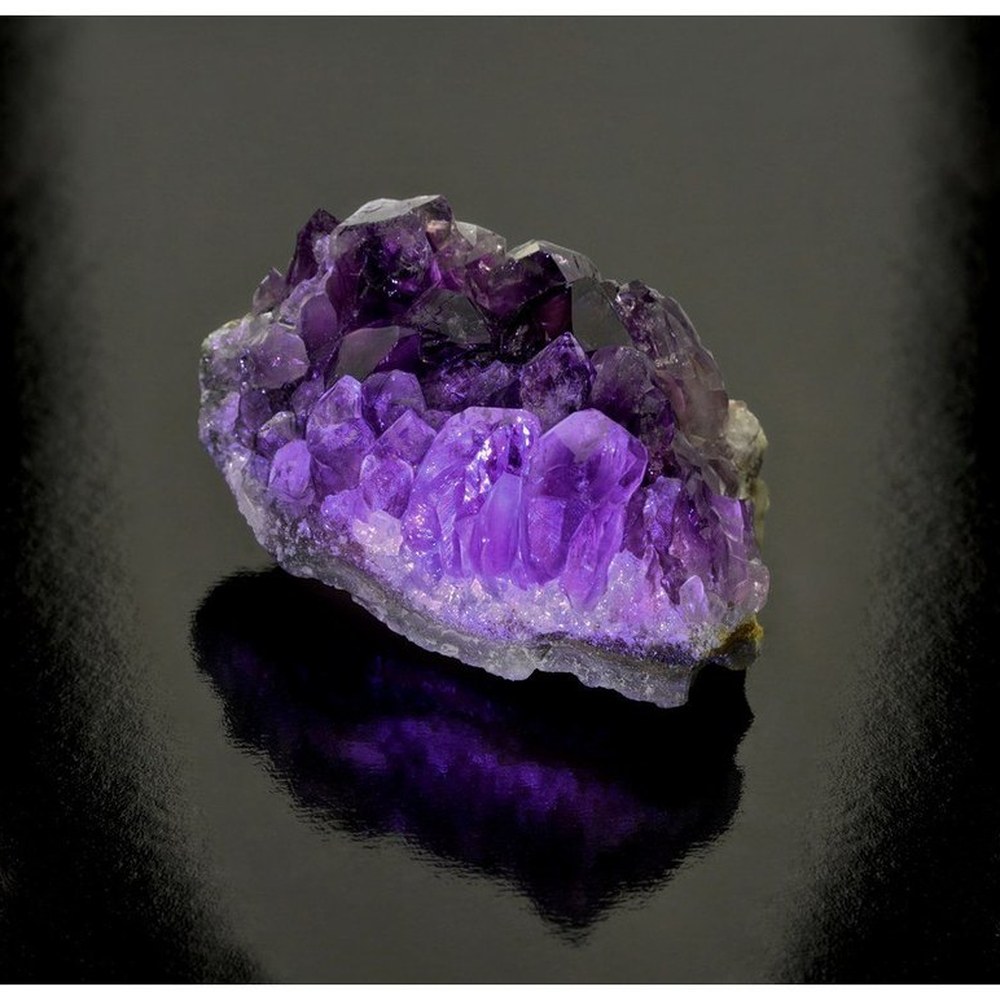
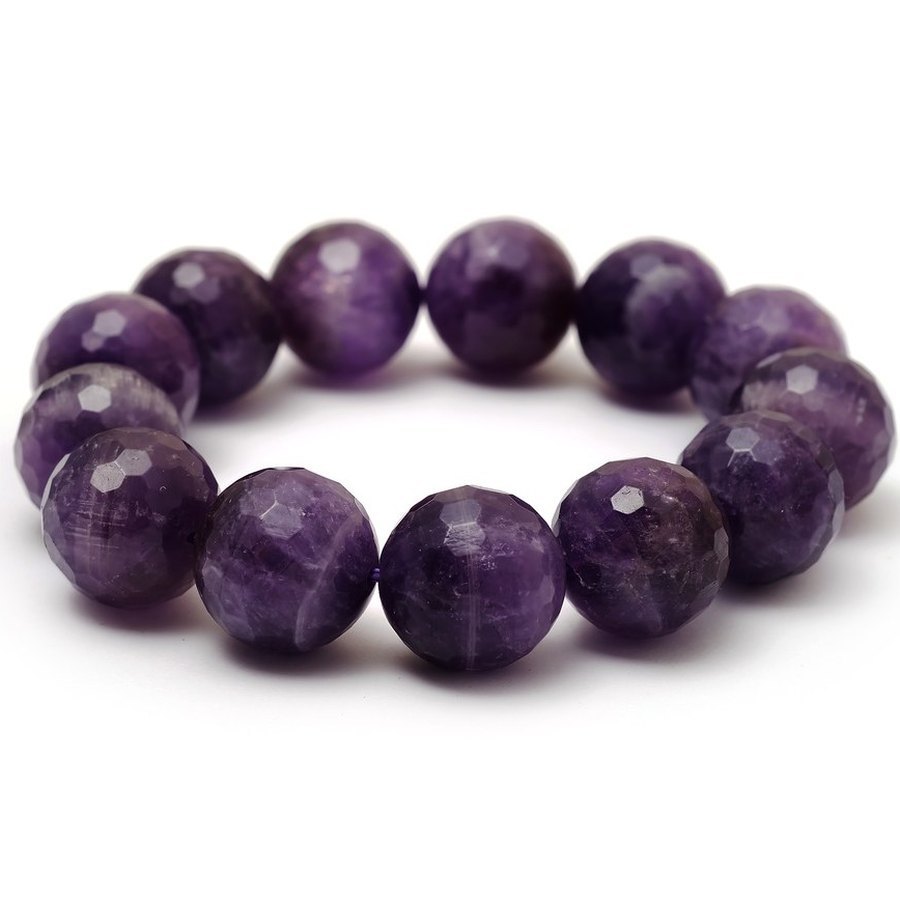
Natural amethyst usually grows in zones: a darker core, a paler rim, sometimes a colour band running across a bead. This is not a flaw and it is one of the clearest signs of natural material. Perfectly uniform beads across a whole bracelet are possible in nature, but they are rare and expensive; at mid-market prices, uniformity more often means dyed quartz.
Clarity
Amethyst sits around 7 on the Mohs scale and is usually eye-clean to semi-translucent. Fine internal veils and small inclusions are normal. What you want to avoid is a bead that is opaque and cloudy throughout — that is low-grade material — or one that is perfectly transparent with no internal structure at all, which may be glass.
Cut and polish
Bracelet beads are cut round and polished. The test is simple: hold the bracelet in daylight and look for a clean reflection on each bead. Uneven polish shows as dull patches or a faint orange-peel texture; a good bracelet reflects the window evenly across all the beads. Bead roundness matters too — slightly oval beads will make the ring sit unevenly on the wrist.
Size
8 mm is the standard for a zodiac bracelet and the most comfortable for daily wear. 10 mm reads as a statement piece and suits larger wrists; 6 mm is better for stacking. Larger beads are not automatically more valuable — price tracks colour and clarity first, size second.
Origin
Brazil and Uruguay produce most of the world's amethyst, and the Uruguayan material is generally darker and more saturated; Zambian amethyst is often smaller and very deep. Origin is useful context, not a guarantee — grading the actual stones in front of you matters more than the country on the label.
Treatment
Amethyst is routinely heated to become citrine; amethyst sold as amethyst is usually untreated. What you will occasionally see is dyed quartz sold as amethyst, which shows dye concentrated in fractures and an unnaturally flat colour. Ask directly, and expect a direct answer.
What a fair price buys
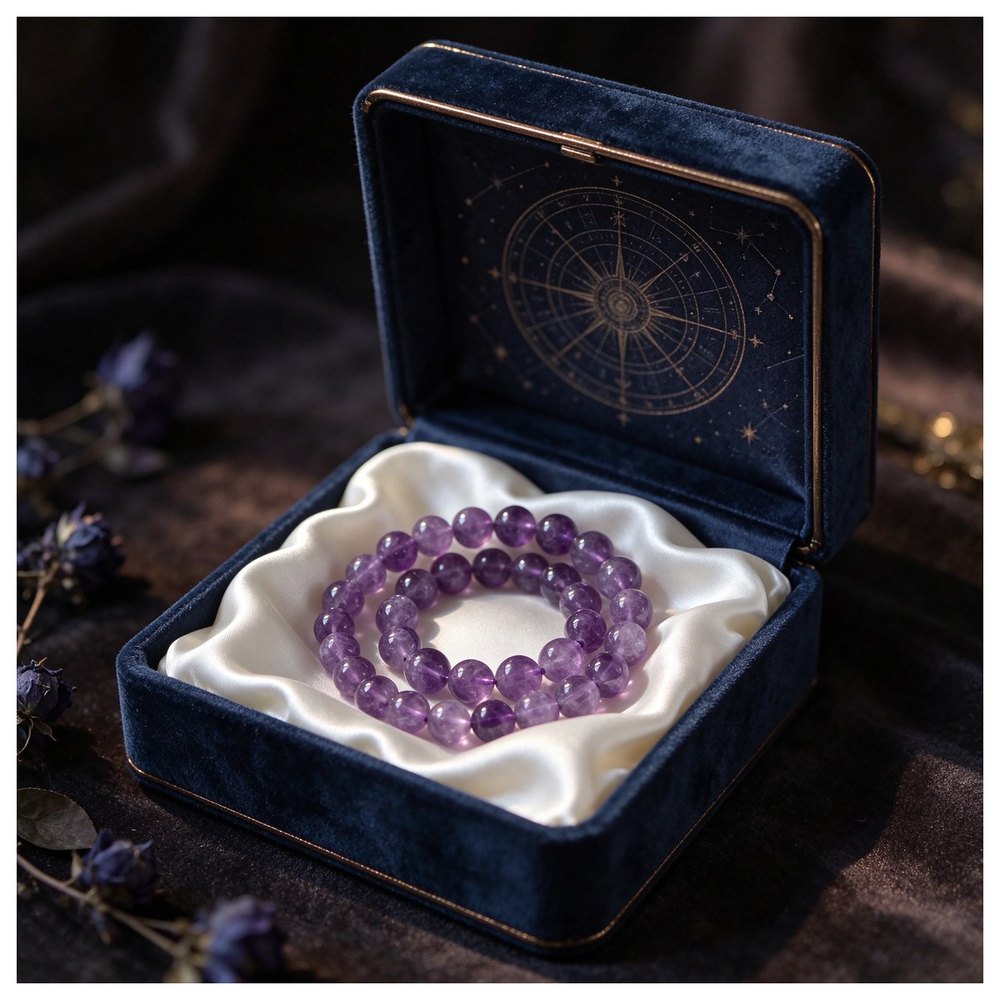
At around $80 for an 8 mm bracelet, you should get natural, untreated amethyst with an even mid-to-deep violet, eye-clean beads, good roundness and a clean polish — plus a bracelet that has been strung properly on double elastic. Below that, something is being substituted. Above it, you are paying for exceptional colour or a designer name, and both are legitimate reasons to spend more.
Our Starwell is graded to this standard, and our authenticity page explains what we check before a bracelet is strung.