An elastic crystal bracelet is a simple object, and most of the ways people damage one are avoidable. These are the rules we give customers with every order, in the order they matter.
Which wrist
The tradition most often repeated is: left for receiving, right for giving — in other words, wear a stone you want to absorb on the left wrist and a stone whose energy you want to project on the right. There is no physical reason for either, and nobody needs to follow it. What matters practically is your dominant hand: put the bracelet on the non-dominant wrist if you write, type or work with your hands, because a bracelet on the working wrist will hit a desk for eight hours a day and the elastic will show it first.
Fit
Measure the wrist just below the wrist bone, then add half an inch. Too tight and the elastic stretches permanently within months; too loose and the bracelet slides over the hand and catches on things. If you are between sizes, size up: the elastic takes up a little slack, but it cannot create room that is not there.
For a stack, keep 4 mm and 8 mm beads on separate wrists. Two 8 mm bracelets on one wrist will grind against each other and dull the polish at the contact points within a season.
Water, soap and swimming
Showering is usually fine for quartz, garnet and agate, though soap leaves a film that dulls the surface. What is not fine is swimming: chlorine and salt water attack the elastic, and a bracelet that has been in a pool twice will start to feel slack. Porous stones — turquoise, lapis lazuli, amazonite — should not be soaked at all, because they absorb water and can change colour or crack.
The rule we use: if you would not leave the stone in a glass of water overnight, do not wear it in the shower.
Sun
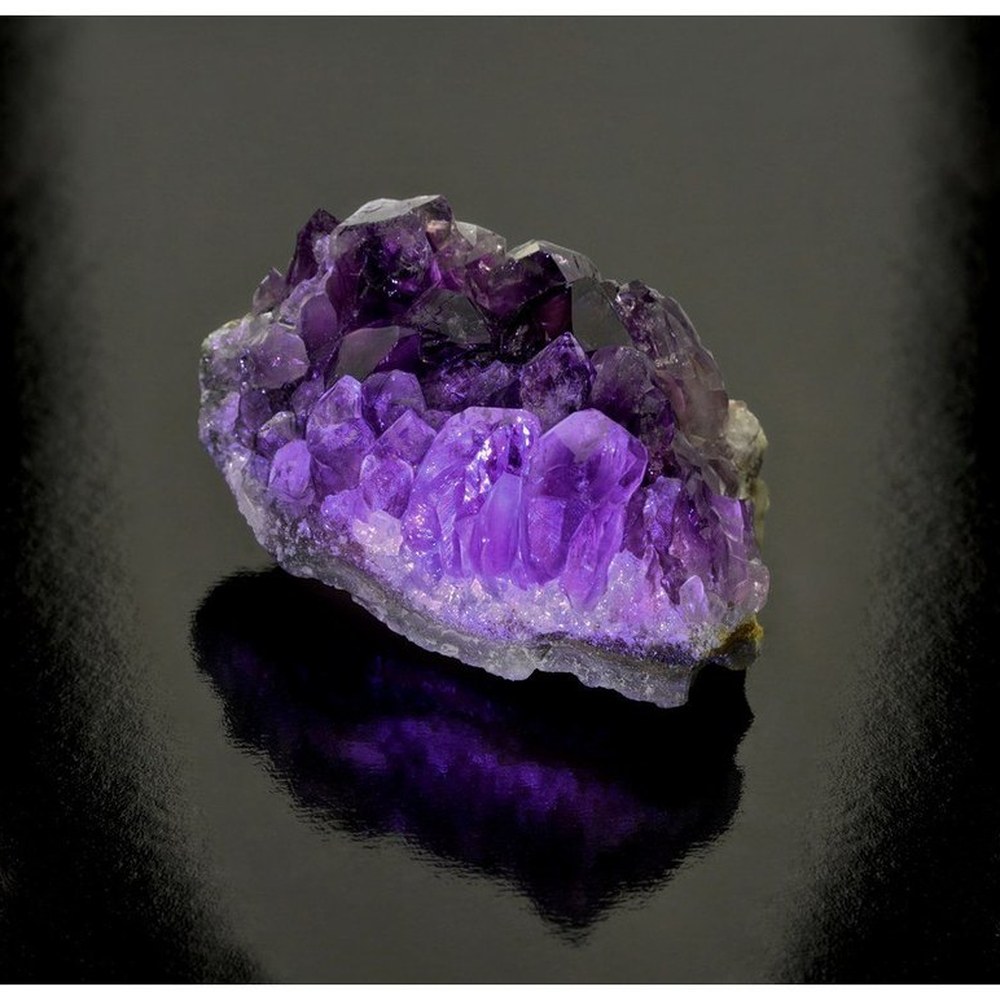
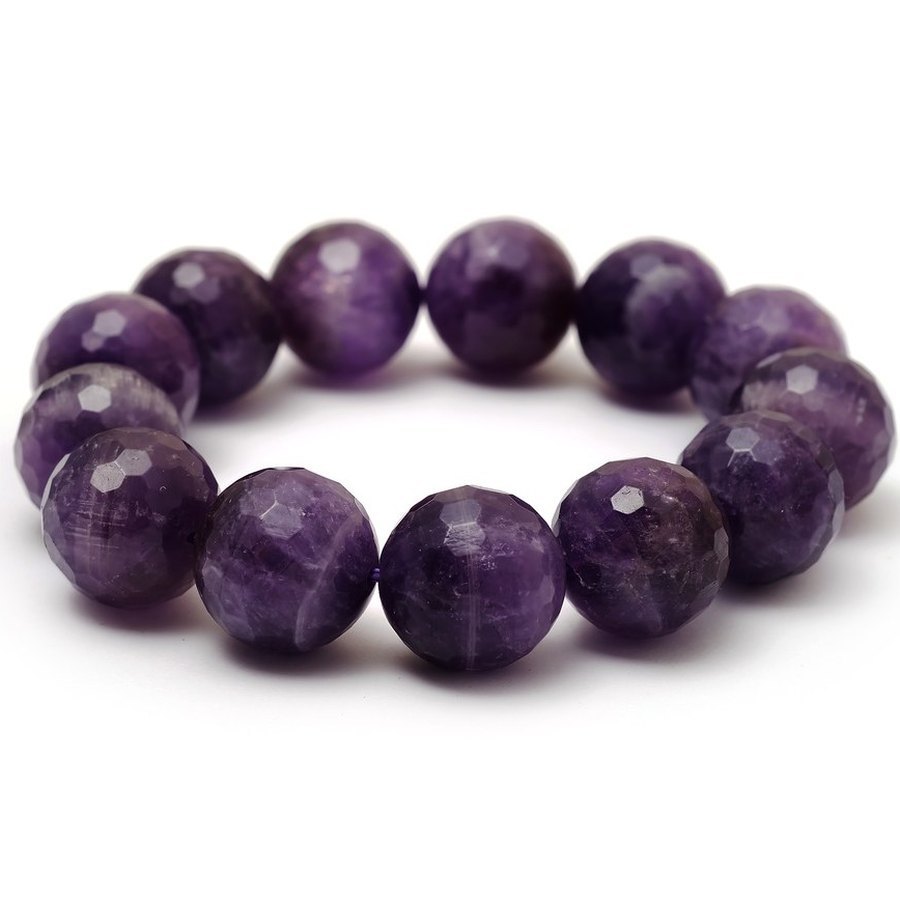
Amethyst, rose quartz and citrine are photosensitive. Rose quartz will fade from pink to near-white over a summer on a sunny windowsill; amethyst will lose saturation. This is not gradual damage you can reverse — it is the colour centre in the crystal changing. Store these three in the pouch, and wear them rather than leaving them in the light.
Cleansing
Cool running water and a soft cloth is the whole method for most stones. Beyond that, the traditional options are moonlight (leave it on a windowsill on a full-moon night, inside, out of direct sun), sound (a singing bowl or a bell), or a selenite plate. All three are gentle and none require salt.
Salt water is the one method we would skip. It is abrasive to polished surfaces, corrosive to elastic, and actively damaging to porous stones. If you want to use salt, put the bracelet in a sealed bag next to a bowl of dry salt rather than in it.
Storage
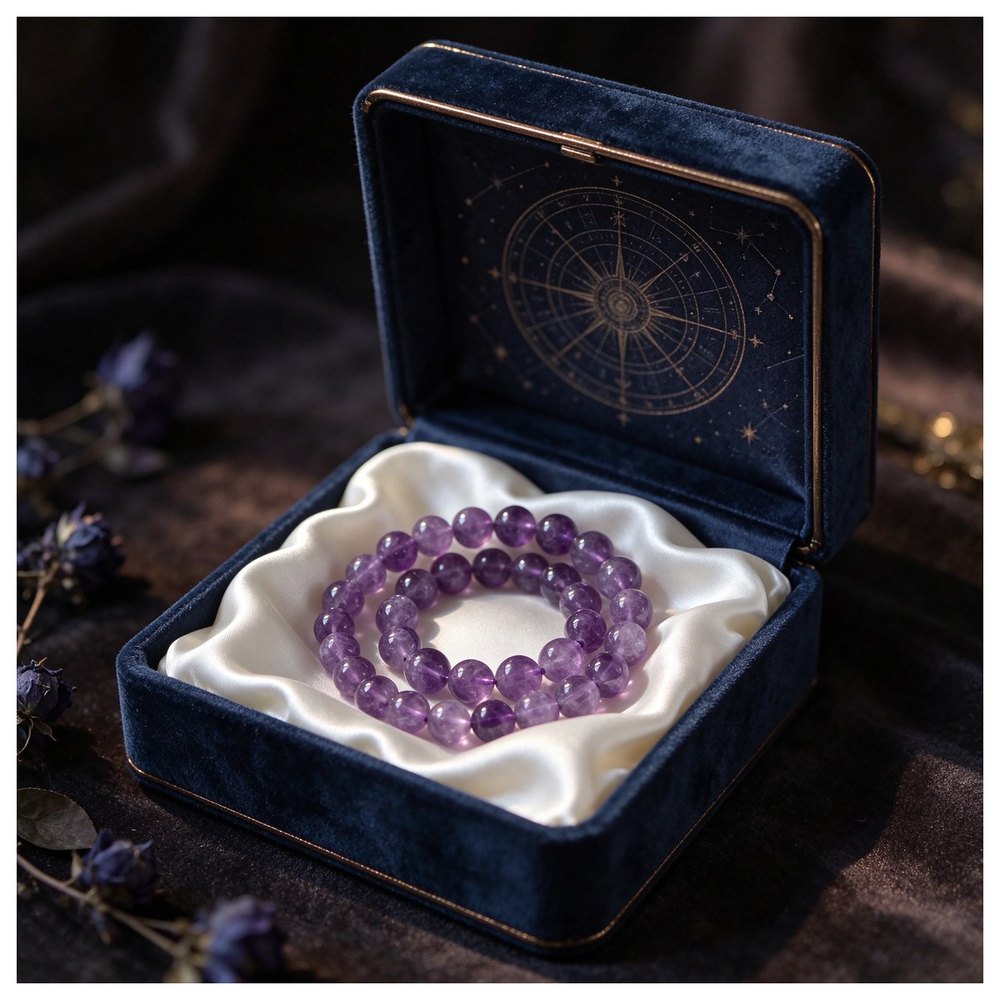
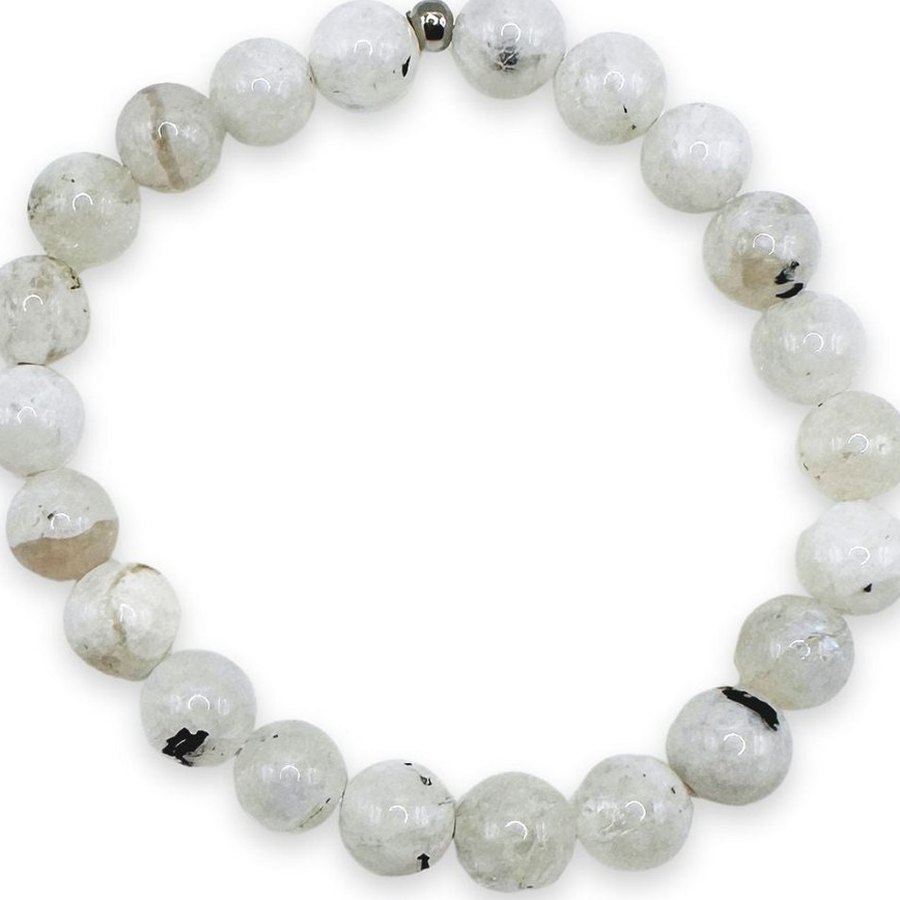
Keep each bracelet in its own pouch. A drawer with three bracelets loose together will produce scratches on the softer stones — moonstone, turquoise, amazonite — within weeks. The box your order arrives in is designed for this: the star-chart lid, the silk-lined base, one piece per box.
Restringing
Elastic has a life. With daily wear, expect one to two years before it relaxes enough to feel loose; the beads themselves will outlast several restrings. We restring any CelestiaGems bracelet once, free of charge. If a bead cracks, send us the bracelet and we will match a replacement from our stock where the stone allows.
When to take it off
Swimming, cleaning with chemicals, lifting weights, gardening, and anything where a bracelet could catch on machinery. Also, and this is the most common one: sport. A bracelet that survives a desk will not survive a kettlebell.